Ideale Formen und roher Stoff
Tuesday–Friday: 11am–6pm Saturday: 11am–3pm
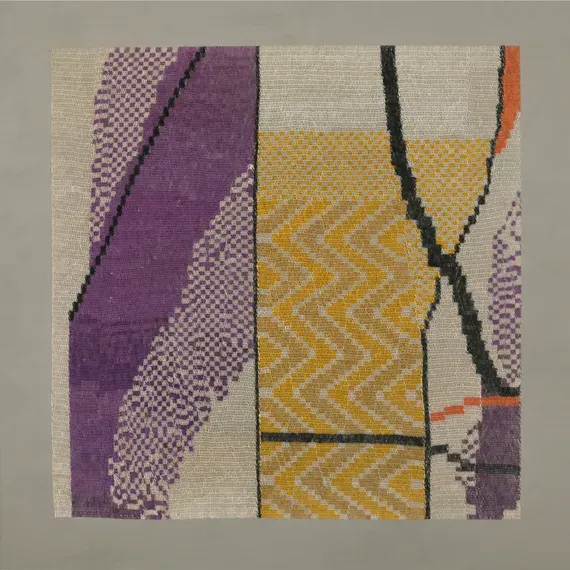
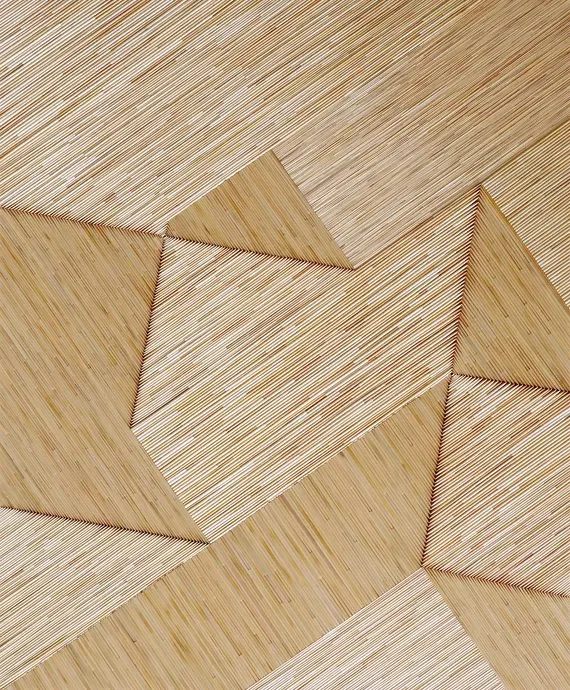
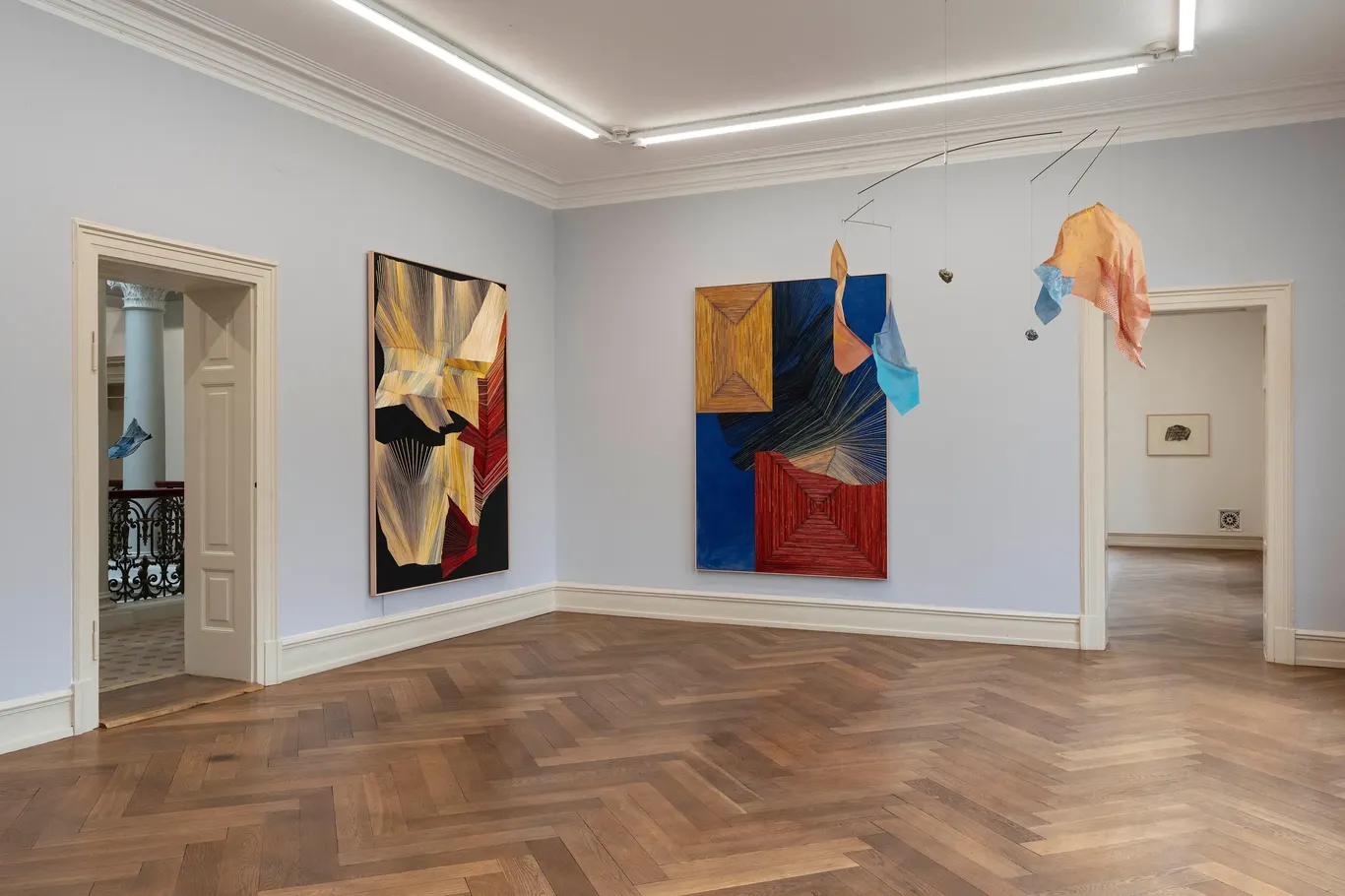
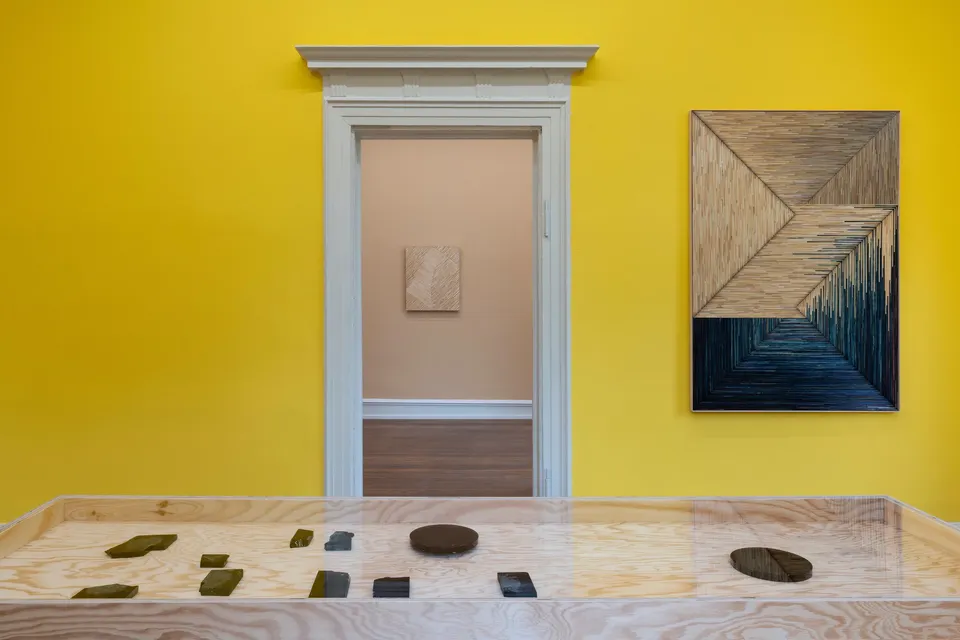
With the exhibition “Ideal Forms and Raw Material,” Olaf Holzapfel (born 1967 in Dresden, lives in Berlin) and Raul Walch (born 1980 in Frankfurt am Main, lives in Berlin) are developing a joint presentation on the upper floor and in the outdoor area of Villa Merkel. The exhibition’s starting point is the question of how spaces of possibility can be constructed from the observation of nature and how architecture, materials, and communal spaces can be reconceived. Holzapfel and Walch engage with real spaces and focus on air, water, plants, and earth—elements that seem so self-evident that they are rarely questioned. The artists explore the slow processes of seemingly simple things, their poetry, and their transformative power. All these elements also shape Esslingen.The rooms of Villa Merkel are designed with willow wickerwork, clay, denim textiles, and movable elements, creating an experience of open, mutable structures.
Olaf Holzapfel transforms natural materials and elementary spatial techniques into artworks, developing new visual languages with a regional connection. He integrates the material spaces in which we live and act into his work, thus resisting simplistic, globalising trends. Raul Walch complements these approaches with kinetic textile installations, banners, and participatory works that incorporate wind, movement, and social processes.In an era of deindustrialization, Holzapfel and Walch explore what space remains and can be newly created after the technological omnipresence of the modern and postmodern world. Both have been engaged for many years with the transitions between material, form, and idea, as well as with ecological connections. The alternative culture of the 1960s and 70s already grappled with these questions by creating temporary architectures, both tangible and intangible. The architect and visionary Richard Buckminster Fuller was already aware of the Earth’s finite resources in his constructions. Esslingen’s building and craft traditions form an important point of reference in the exhibition. Timber-framed architecture and weaving alike rely on repetition, structure, and the connection of individual elements. This thinking in terms of structures and patterns continues to shape the city’s architecture and history. The industrial landscape of the Neckar Valley, with its transport routes, factories, and infrastructure, also remains a visible trace of modernity. In his book “We Have Never Been Modern,” philosopher Bruno Latour described the distinction between nature and society as a fundamental principle of modern societies, while at the same time hybrid structures and interstitial spaces continually emerge in which both realms are intertwined.This is the starting point for the exhibition: it explores the extent to which our current view of material, space, and the environment is still shaped by the concepts of industrial modernity. Holzapfel and Walch take up traditional techniques such as basketry, weaving, and timber framing and examine, in an associative manner, why these construction methods have endured for centuries. In the mid-19th century, the architect and art historian Gottfried Semper analyzed textile techniques such as weaving and basketry in his theory of style, recognizing in them the creative origin of architecture and ornament. For Semper, braiding fibers was an interplay of mental competence, physical labor, the possibilities of nature, technology, and cultural necessity—a way of creating meaning. Holzapfel and Walch explore this material, interconnected world from which our fundamental concepts emerge. They develop new visual formats that are less tied to a specific era than to the possibilities of our material space. Material is a carrier of memory. It doesn’t simply depict the past, but rather keeps it present through its continued use in different times and contexts, constantly re-examining it. Thus, it’s less about nostalgia than about the knowledge of material, construction, and community inscribed within spaces, and about a blueprint for a different future.
Works
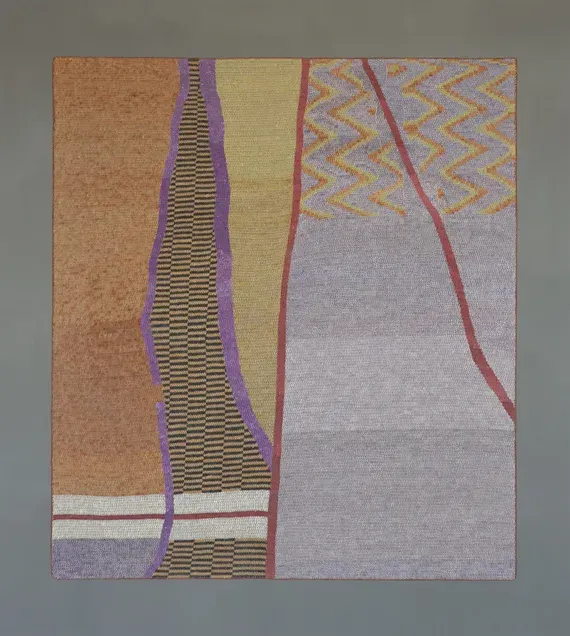
Olaf Holzapfel
Chaguarbild NR 41
2021
Handwoven textile
164 x 142 cm
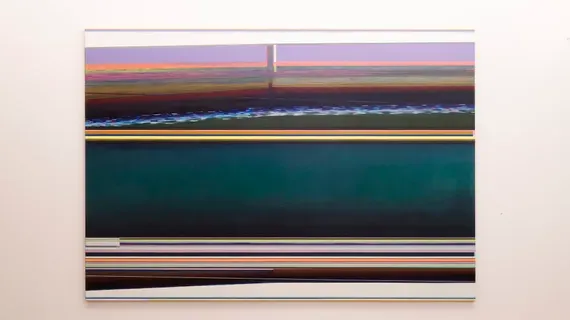
Olaf Holzapfel
Horizont - nah unter einem Baum
2019
Oil and acrylic on canvas
170 x 250 cm