Tuesday – Sunday, 10am – 6pm Wednesday, 10am – 8pm Monday Closed
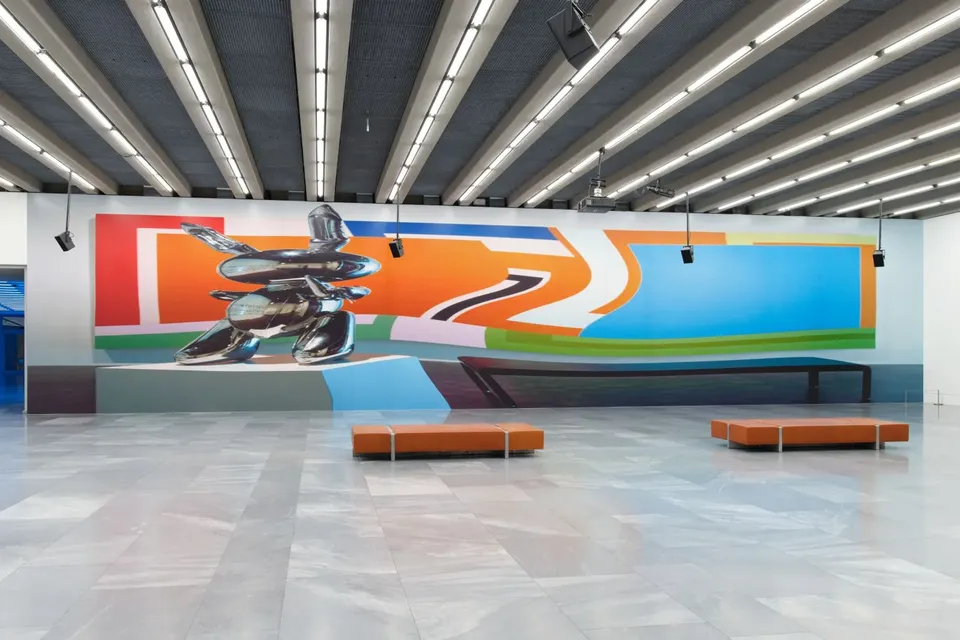
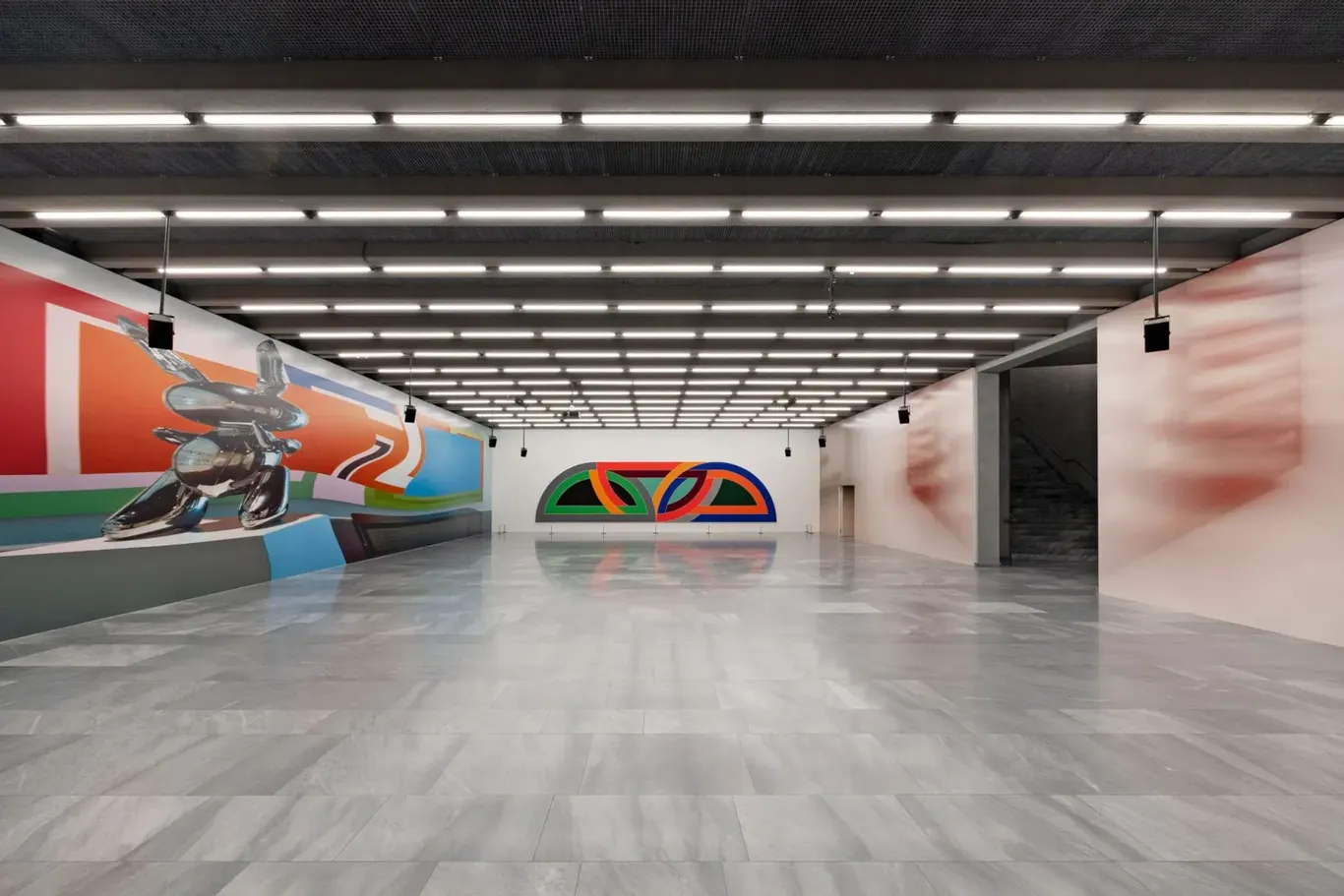
Louise Lawler presents the two works ”(Bunny) Sculpture and Painting (adjusted to fit, distorted for the times)” and “Three Flags (swiped and taken) (adjusted to fit) (mirrored or flipped) Cease Fire” at Kunstmuseum Basel, which enter into a dialog with the works “Damascus Gate. Variation I” (1969-70) by Frank Stella and Sol LeWitt’s “Wall Drawing #304” (1977) on site. Both works are part of the “adjusted to fit” series, in which Lawler digitally adapts her photographs to fit the exhibition space.
”(Bunny) Sculpture and Painting (adjusted to fit, distorted for the times)” shows a distorted photograph of Jeff Koons’ “Rabbit” (1986) and Peter Halley’s “The Acid Test” (1992), which Lawler photographed in the exhibition “The American Century” at the Whitney Museum in 1999. The exhibition was widely and extremely controversially discussed at the time and raised questions about national identity and overarching narratives of art history.“Three Flags (swiped and taken) (adjusted to fit) (mirrored or flipped) Cease Fire” shows Jasper John’s “Three Flags” (1958), which Lawler photographed in the exhibition “Jasper Johns: Mind/Mirror” at the Whitney Museum in 2021. As the title makes clear, the work belongs to the ‘swiped’ group of works. The verb ‘swiped’ refers to the fleeting nature of an image and alludes to the way we consume visual information today.The work “Flag above White with Collage” (1955), donated by Jasper Johns in 1994, is exhibited on the second floor of the new building and although Jasper Johns’ iconic American flag almost disappears in Louise Lawler’s work, it remains recognizable for many viewers. Louise Lawler emphasizes the cult of the ‘masterpieces of art history’ through the clear recognizability of the original. At the same time, she questions this cult and the national identity and art historical canon associated with it by taking Johns’ work, changing it and exhibiting it repeatedly. The works are printed on self-adhesive vinyl and installed in the room, which is part of the art presentation. The tension between the photographed works in the original presentation, Louise Lawler’s work and Lawler’s work in a new context plays a central role in her work.