Heads or Tails
Tuesday–Saturday: 11 am–7 pm Sunday & Monday: Closed
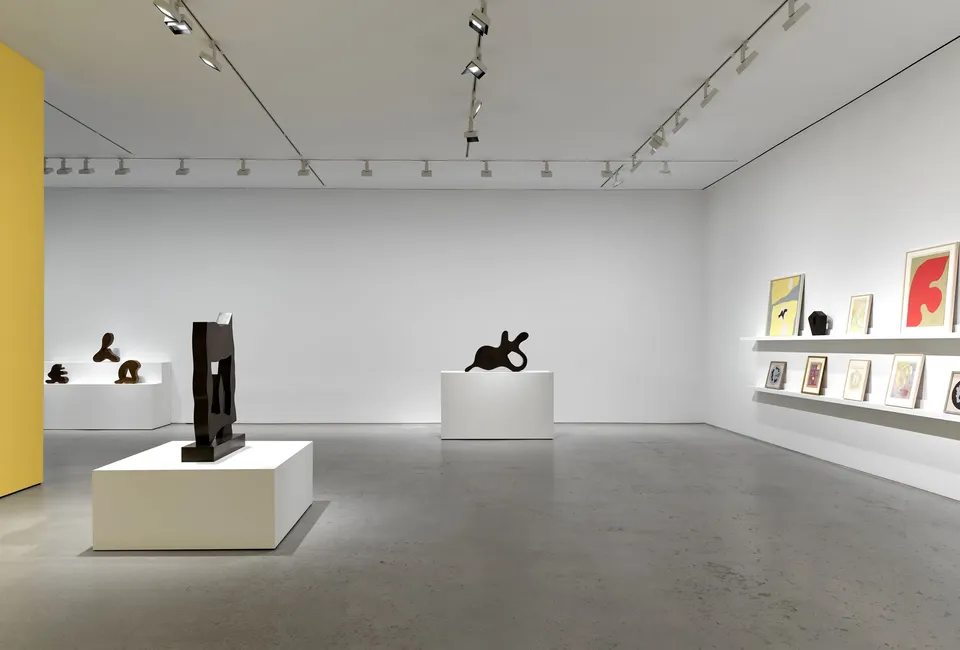
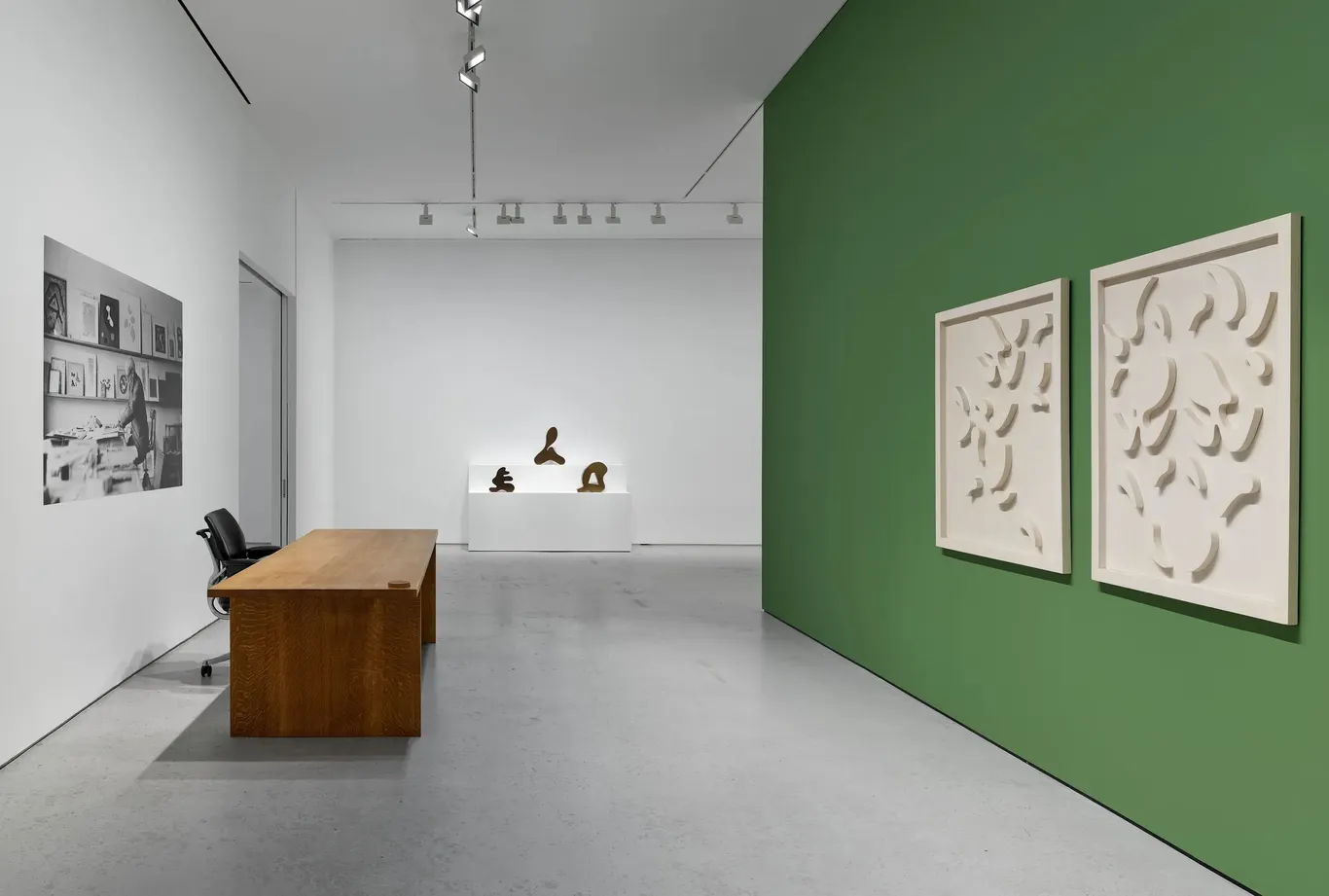
New York... This fall, Hauser & Wirth presents ‘Arp. Heads or Tails’, the first New York exhibition in nearly fifteen years dedicated to the seminal German-French modernist. Organised by Curatorial Senior Director Alexis Lowry, in collaboration with the Stiftung Arp e.V., Berlin/Rolandswerth, this presentation takes Arp’s late Threshold sculptures as a point of departure, situating this pivotal but underexamined body of work within the trajectory of Arp’s long career of aesthetic and philosophical inquiry. The exhibition’s design takes inspiration from Arp’s studio in Locarno, Switzerland, and traces a line from his early cut-outs and reliefs to his mastery of form as a tool for reconfiguring and transforming our perception of space.
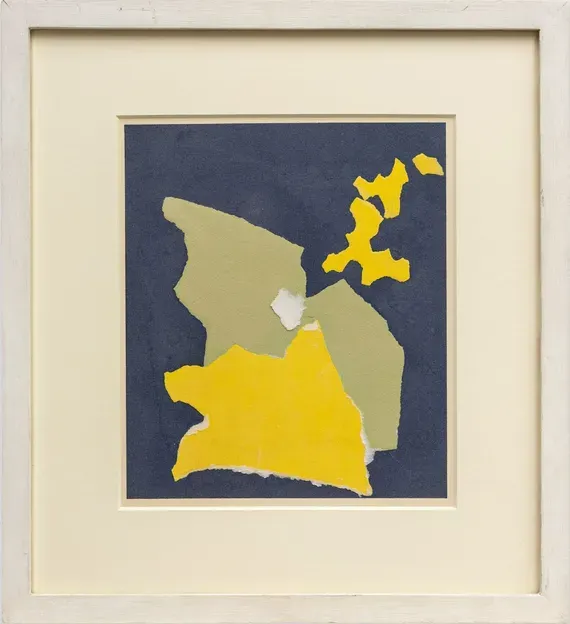
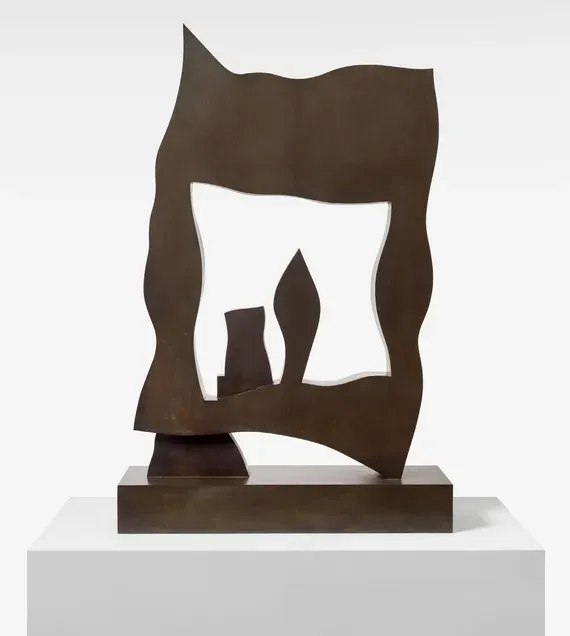
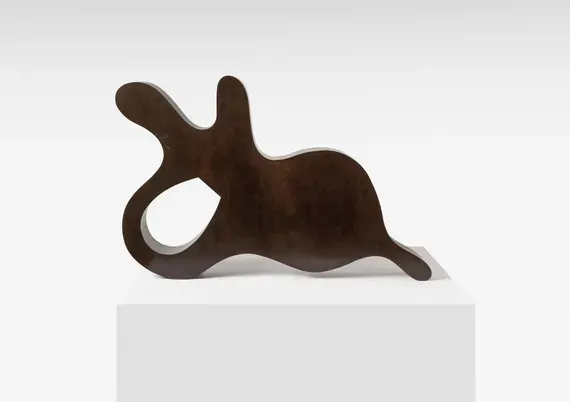
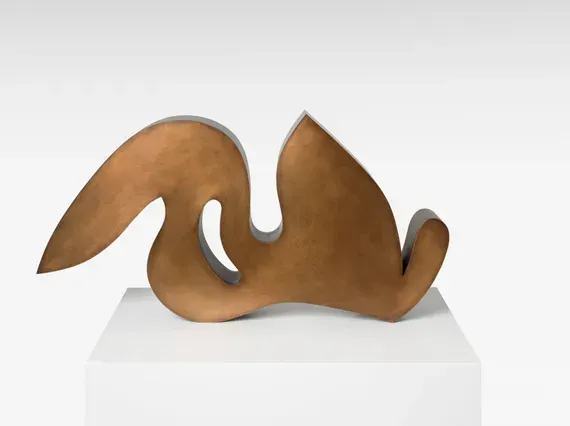
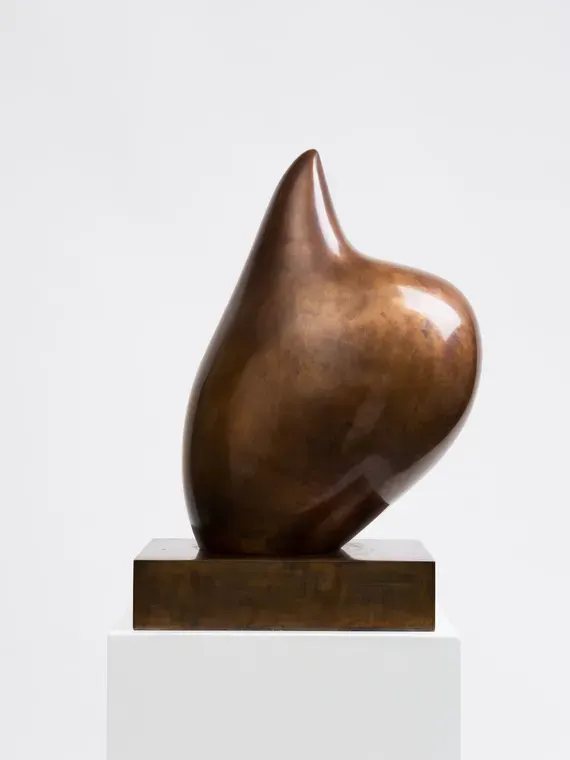
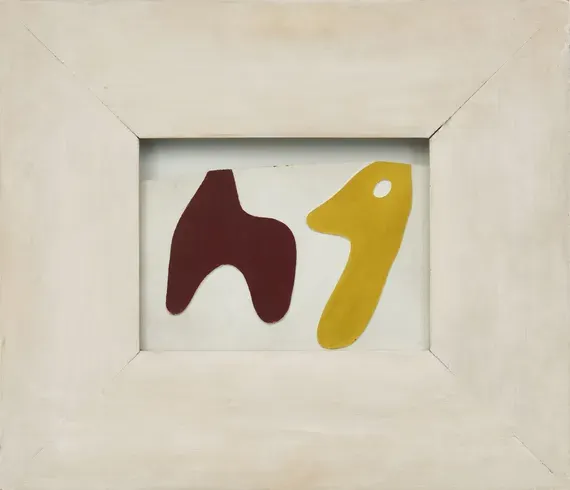
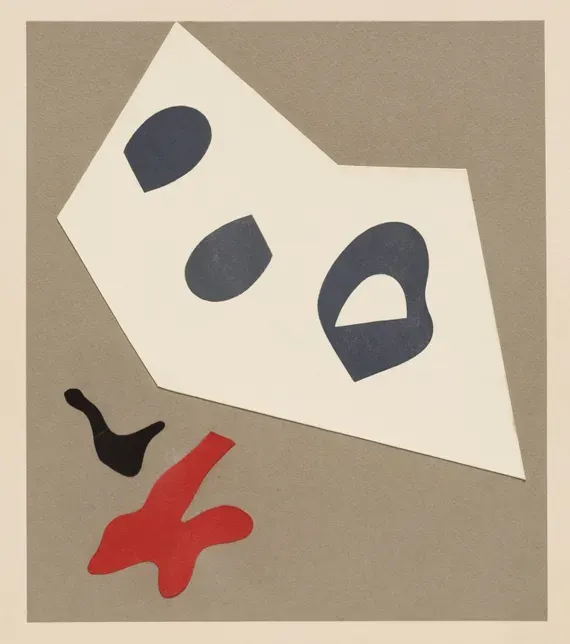
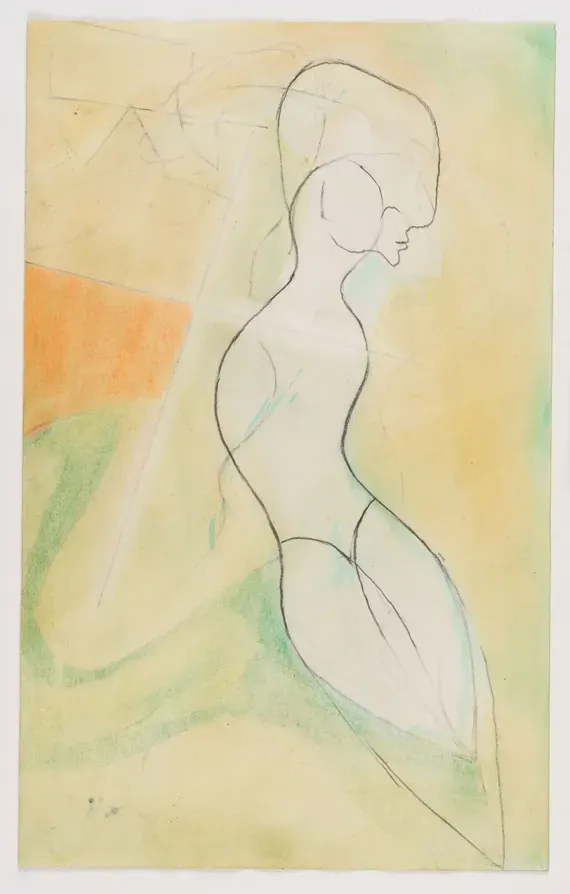
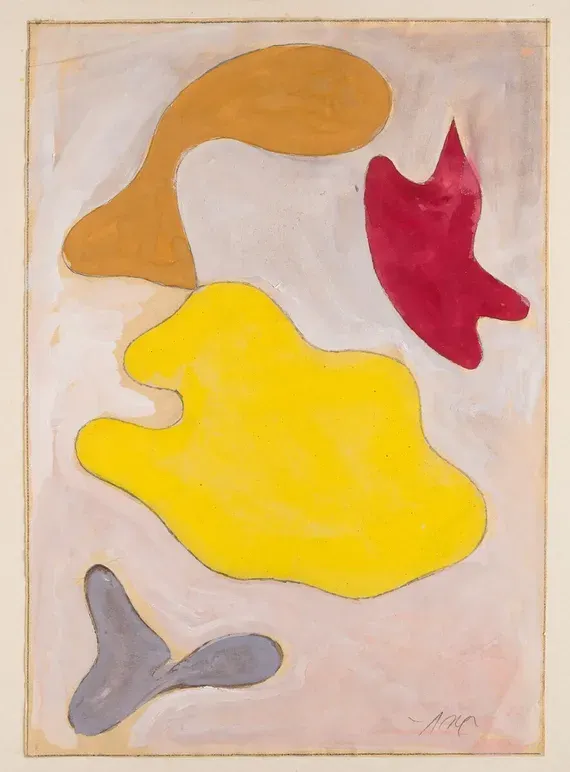
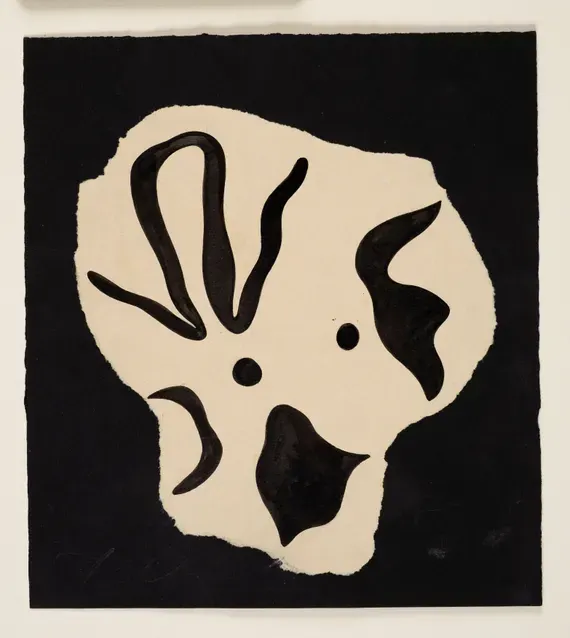
‘Heads or Tails’ presents key examples from the Threshold series alongside a selection of rarely exhibited works on paper and late sculptures. The juxtaposition reveals how elements of Arp’s visual language migrated across materials and forms, accruing new meaning through a process of perpetual reinvention. The exhibition coincides with the release of ‘Arp: Paper’ from Hauser & Wirth Publishers, a survey of nearly two hundred works—many never before exhibited or published—that situates paper at the very heart of the artist’s practice.Arp described the Threshold sculptures, which date from 1958 onwards, as an extension of his established practice of cutting and collaging paper, writing that the works resulted from ‘the same principle of cut-out forms, now applied to space.’ Unlike his earlier engagements with three-dimensional form—primarily self-contained, biomorphic structures—these objects appear as if torn directly out of a picture plane.‘Ruhende / Allongée (Reclining)’ (1960), for example, enlarges and remixes motifs from drawings such as ‘Stuhl und Flasche / Chaise et bouteille (Chair and Bottle)’ (1926) and ‘Vegetale Nacht / Nuit végétale (Vegetal Night)’ (1938), becoming a ‘threshold’ not as a fixed boundary but as a point of passage into greater dimensionality—an opening out into the world. The freestanding object is animated by the viewer’s movement around and through it, taking on a new shape and meaning as it is experienced from multiple points of view. The exhibition’s namesake, ‘Wappen oder Zahl / Pile ou face (Heads or Tails)’ (1959), references this double-sided nature directly in its title while also invoking chance—a generative force throughout Arp’s creative process.‘Das kleine Theatre / Le petit théâtre (The Small Theatre)’ (1959) exemplifies the Threshold series’ ability to draw surrounding space into the works themselves. An image within an image, ‘The Small Theatre’, appears almost like a relief whose back panel has been removed, opening the composition to its environment. Here, the spaces between forms become as important as the forms themselves, transforming a principle central to Arp’s collages into a fully realised spatial experience.If Arp’s early collages and reliefs informed his Threshold sculptures, the later paper compositions on view, including a selection of diptychs and watercolours from the 1960s, suggest that the exchange was reciprocal. In dialogue, these works—ripe with motifs that recur throughout his sculptural practice—reveal an artist continually revisiting and reconfiguring his visual vocabulary across mediums.The bronze sculptures presented in the round further underscore the fluidity of Arp’s practice, demonstrating how forms first explored in relief, collage and drawing repeatedly found new expression in sculpture, where they were transformed by scale, material and three-dimensional space. Viewed alongside these parallel bodies of work, the Threshold sculptures take on new significance. Created during the final decade of his life, they reveal an artist working simultaneously across multiple threads of inquiry, revisiting longstanding motifs while continuing to generate new forms and ideas. For Arp, the threshold was not simply a point of passage but a space of possibility—a concept that remained central to his understanding of artistic creation and life until the end. Courtesy Stiftung Arp e.V., Berlin/ Rolandswerth and Hauser & Wirth.